• Trivia Night!
    Join us for 3rd Thurs With CHUM on April 16th at the usual time of 7:30 pm CT at Jake's Sports Bar or Zoom. There will be Prizes for the winner(s)! More details at this link.
  • 2nd Sunday w/ CHUM
    Join us for 2nd Sunday with CHUM on May 10th at 10:00am CT on Bowling Beach at Blue Lagoon! More details at this link.
  • Join your fellow CHUMmers for an afternoon of crawfish and banter! Details at this link.
  • CHUM stickers are here! Put one on your scuba tank, your gear box, your car, your forehead. See a club officer to get yours.
  • Become a full fledged CHUM member by paying only $35/year to become a Tiger Shark, pay for trips or even pick up an extra CHUM T-shirt or CHUM patch here: CHUM Payments.
  • For CHUM's list of greater Houston area dive shops, dive sites, and dive charter operators see this link.
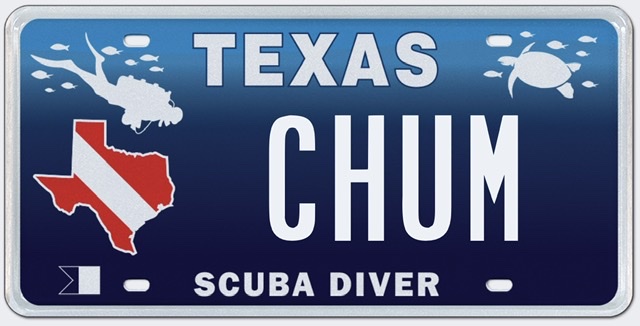
  • CHUM - Houston's SCUBA Club is the sponsor of the Texas SCUBA Diver license plate. Get yours at MyPlates.com!
  • Stream2Sea! Great products that are good for humans and the reef. Use the affiliate link below or check out with coupon code “chumrocks” and get 10% off your purchase. Click this CHUM affiliate link to order your products.
  • Follow CHUM on these platforms to keep up with what the club has going on Facebook, Instagram, Scubaboard, and YouTube.

    And for Texas Dive Plates: TDP Facebook and TDP Instagram.

  • Questions, suggestions, want to lead a CHUM trip or learn about the CHUM officers? Contact us: Your CHUM Board of Directors.

Wreck Penetration Training

ivan_abz

Nurse Shark
First Name
ivan
I've been looking at the pictures on thermos website of the clipper rolling and going down. I didn't know they had cut 'shafts' down from the deck into the guts of the ship to aid exploration (in addition to the holes they have cut in the sides).
Now I must admit even with the clipper on her side those big shafts going right into the ship would look very tempting to open water divers like myself and it sets me wondering....

what training would be a sensible minimum before I put more than my head into those holes ?

I'm assuming it;s more than padi wreck specialty ? I dont want to draw a map or measure it, I want to go all in the way inside and have a poke around.

Would appreciate some guidance
 

thermo

On the Wall at Some Key West Men's Room
First Name
John
Good One

In light of recent sinkings I'm surprised no one has chimed in on this one. I am imaging them that might be posting here sleeping off a 6 hour drive at this moment.

Although I'm not taking a position on this (because I don't want to be liable as a trip operator) I can think of two friends I have who will be diving this wreck. One would never go in without wreck training, but the other would dive through the whole damn thing without batting an eye.

Admittedly, as I look at openings in ships when I’m lucky enough to go to one, it's the question "do you feel lucky" that always come to mind. Well do you? With no training at all, sooner or later you won’t be. Be careful, and don’t let someone who wants to sell you training tell what you want or need. Diving is bad about that.
 

ivan_abz

Nurse Shark
First Name
ivan
I have heard of enough fatalities of untrained divers on in wrecks to scare me enough not to go inside a wreck without being prepared (although I will admit to swimming through the 'wrecks' in blue lagoon).
Would like to train towards this though.

After visiting the lexington in corpus, my ultimate training goal is to be competent enough to go into the hanger beneath the flight deck on the oriskany. Although this is deeper.
 
Last edited:

pete

Nurse Shark
First Name
Peter
Hi Ivan,

I am just going down the route of some more exotic training myself, so I might be able to you give you my point of view. I am sure the people who have completed the kind of training, and more importantly have obtained the experience, I am talking about will be along shortly to set me straight.

From reading the reports on the Clipper, I gather that the depths are quite suitable to do on normal gasses (PADI EANx or something like that), so the kind of training you’d be looking for is more focused towards dealing with overheads. Although some agencies offer specific wreck training (and there are some differences with cave training), it is a bit more common to do cave training for this (just because there seem to be more cave instructors around than wreck instructors, especially around Florida :). Some form of extended range training is not bad either, although this might be as simple as getting used to diving with a twinset and possibly a stage, so you can carry enough gas for a long dive. The penetration training would consist mostly of line drills, team communication and zero-vis training so that is something you want formal instruction in and that intro to cave courses cover well.

The Oriskany with the flight deck at 135’ and the bottom at 212’ is quite a different animal. Although for some people these depths are acceptable on “deep airâ€Â, if you want to actually remember the dive, I’d suggest you need at least an entry trimix qualification by an agency of your flavour. This would entail something like TDI Normoxic Trimix, which only has advanced nitrox and decompression procedures as prerequisites. Although if you're going that way, yuo might as well get teh whole enchilada and get full trimix qualified IMO. On top of that, inside the hangars you’ll have to be completely comfortable with scooters to enable such a dive, so some kind of a more fomal extended range course is also a necessity IMO.

In summary, my take on wreck training goes along two lines: get overhead training (cave) and get depth training (trimix) appropriate for the depths you think of tackling. Although I have no intention myself of diving caves this means I will obtain cave training at some point and at the moment I am working on trimix training (for me the easier part here in the UK). TDI and IANTD are the common choices in the States to do this kind of training (and they even offer specific wreck training through some instructors). Personally I have chosen another agency and my own long term goals are GUE Tech 2 & Cave 1, as that covers almost all the wrecks I can think of that I would ever want to dive. (and I get to drink Kool-Aid in large quantities). Some good write-ups on depth training by other people on this board here and here

Hmm, reading back over this, I realise that I assumed silently that PADI Rescue or SSI Stress& Rescue or similar is a given (this is IMO a minimum qualification for this type of dives and effectively what we expect of people to have or reach pretty quickly here in the UK for any kind of diving – although that provokes a whole other discussion).

Oooh, last remark, if you’re looking for an instructor, there is a thread on here somewhere (by Chunky I think) that gives good tips on how to decide you found a good one (normally the quality of the instructor is more important than the letter soup). Can’t quite find it at the moment, so you’ll have to nose around a bit.

Cheers,
Peter
 

dutch

Nurse Shark
First Name
John
Hey Ivan, drop by and talk to CaveDiver. He will be a wealth of knowledge on the subject.
 

jdavis

Nurse Shark
First Name
Jonathan
Oooh, last remark, if you’re looking for an instructor, there is a thread on here somewhere (by Chunky I think) that gives good tips on how to decide you found a good one (normally the quality of the instructor is more important than the letter soup). Can’t quite find it at the moment, so you’ll have to nose around a bit.

Try post 6 of this thread: http://www.chumclub.org/forums/showpost.php?p=7812&postcount=6

JD
 

ivan_abz

Nurse Shark
First Name
ivan
I was being put through 'cavern' in florida three weeks ago by Mr CaveDiver himself and hope he can also take me through 'intro to cave' this winter.
CaveDiver is a great instructor and I'd recommend him for technical training.

Now I've done some research for myself (rather than hoping someone would do it for me) it looks like the course that would give the confidence to enter those shafts would be IANTD Advanced Wreck Diver. To get there I would need to do IANTD Deep Diver and Advanced Nitrox.

I have AOW, padi nitrox and about 65 dives to my name. There does seem to be a lot of overlap in the drills in DeepDiver/AdvancedNitrox so will need to discuss with instructor what I need to do.
 
Last edited:

texdiveguy

Nurse Shark
First Name
alan
Your cavern/intro cave training and gradually gained experience will provide you with the basics needed for simple penetration into artificial reefs/ships that have been made 'safe' for recreational diving....also assuming you have taken into account the ness. redundant gear (gas--lights--etc.) and you are staying within NDL limit profiles using safe protocols and what god gave us all our brain. Let it be noted that outside the obvious similarities between caves and ships....penetrating a complex artificial reef or 'true ship wreck' requires additional training and skills....just being full cave does not ness. qualify a divers for serious wreck penetration....nor does the wreck diver have any business in a cave system without the benefit of cave training. Regardless of what some folks will want you to believe...caves and true penetratable wrecks have many things uncommon to each other....wrecks are very active environments not to mention being located in o/w settings will require the mastery of advanced o/w experience. Most serious wreck divers as advanced cave divers will also be cross trained in such areas as advanced nitrox and decompression as a minimum, and many go to the following levels of trimix and advanced trimix....and alot of divers knock out these tech advanced gas/deco courses first. If you are real serious about wreck penetration diving a structured full week course in advanced wreck(TDI-NAUI and a few others) would be suggested under the instruction of a real world 'wreck diver' doing dives in the environment you might find yourself most likely diving....be it the warmer waters of the gulf or the cold waters of the Great Lakes. PADI and NAUI offer good basic wreck classes that can option in based on your needs and the instructors ok very basic penetration techniques.....but mainly the classes are to instruct on safety and exterior observation and the basic gear needed beyond o/w gear. If at some point you wish to pursue an advanced wreck diver course you will be req. to have either rec. wreck or cavern certif.., which it appears you have done cavern. Wreck penetration diving is serious business and posses major risks to divers....never penetrate wrecks or caves without the proper training/gear.
 

pete

Nurse Shark
First Name
Peter
I completely agree with texdive guy's remarks above. A "real wreck " is quite a different beast from a prepared wreck and you would be benefit a lot from learning from someone who dives wrecks (active overhead environments) regularly as opposed to someone who's main interest is in caves (passive overhead environments). This is exactly what I am doing, but funnily enough the wreck diving community is a lot less "streamlined" than the cave diving community (e.g. there are very big differences between the approaches of the local groups with regards to penetration which makes it sometimes a bit of a pain in the *** to determine what is right for you).
In the mean time though , some cave training definitely does not go to waste ...

Taking myself as an example again: as an (ex)-mining engineer I have seen all the caves I'd ever want to in my life, so cave diving does not entice me at all, but an intro to cave course is on my list nontheless just for the benefit of cross training as texdiveguy mentions above.

After reading through your "diving resume", I just wanted to add that you should really consider some form of rescue training before (or during) taking on any kind of wreck/deco procedures training. Although it might not be compulsory according to some course requirements, it is in my opinion really a minimum dive grade resulting in sufficient "comfortability" for the kind of wreck penetrations we are talking about on this thread (a very good one by the way).

Also, at 65 dives it is quite important to start building up experience rather than rush so-called "technical" training through (rescue training being the exception as IMO it more raises your general situational awareness rather than teach you specific new diving skills). Also, nobody said that experience could not be gained by diving along the outsides of the wrecks you plan on penetrating later ....

Peter
 
Top